


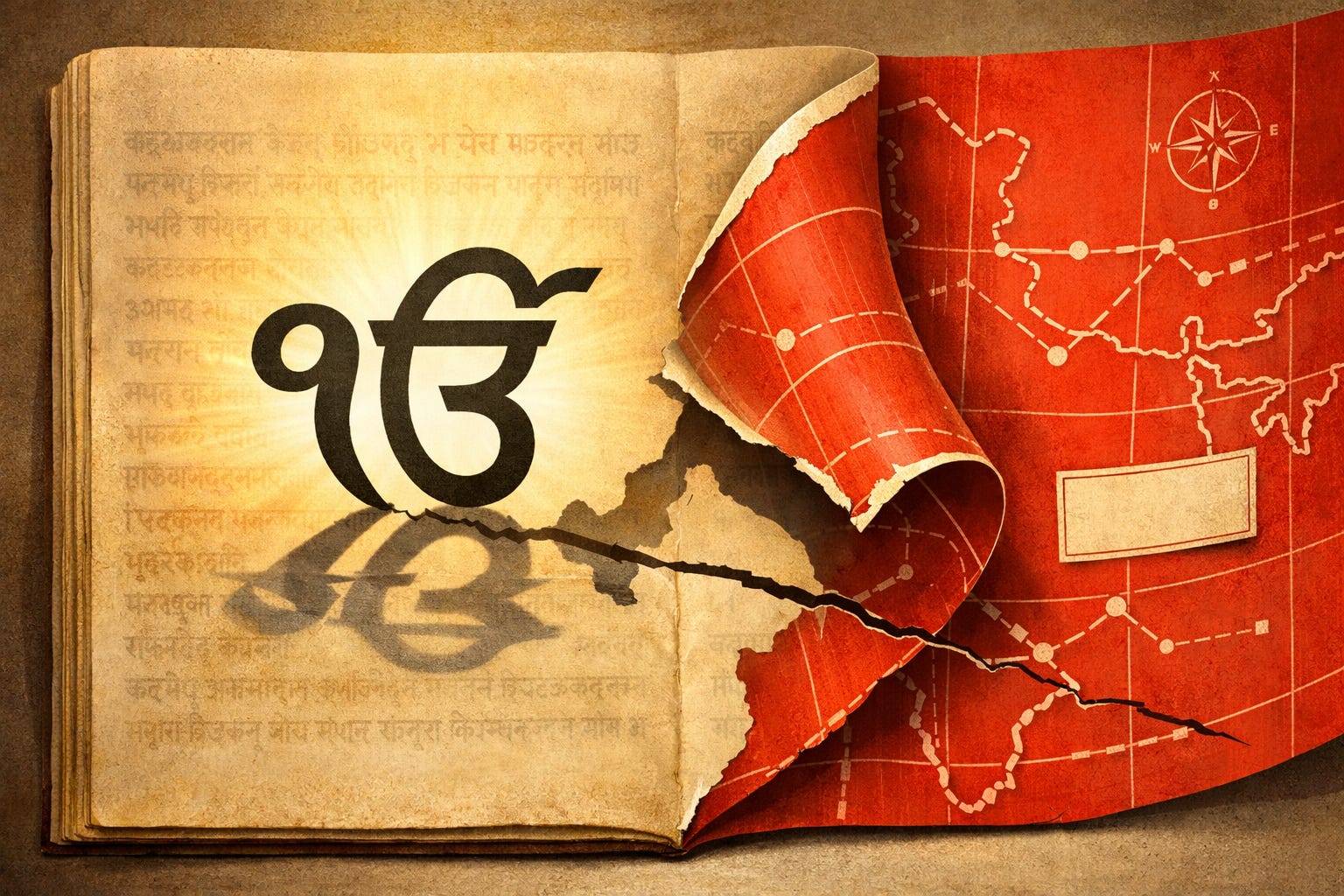
A recurring mistake appears whenever people write warmly about Sikhi from outside Gurmat’s own centre. Sikh history is praised, the Gurus are admired, the Khalsa is celebrated — and then all of it is quietly placed inside a national story. The praise is real. The misframing is real too. For me, the only final source of Sikh meaning is Shabad Guru Granth Sahib Ji. If a claim about Sikhi cannot stand before Shabad Guru Granth Sahib Ji, it should not be made to carry Sikh authority.
This is not a warning only about India, though India is often the immediate pressure in our context. It is a warning about all nationalism. Sikhi does not become truer when it is made to serve a nation-state’s story about itself. It becomes smaller. A Sikh may live in a nation, serve society, and work for justice in public life — but the Guru is not a department of the nation, and the Khalsa is not a mascot for patriotic feeling. That is the correction this essay makes.
The Sikh centre begins with the One, not with the nation
Gurmukhi
ੴ ਸਤਿ ਨਾਮੁ ਕਰਤਾ ਪੁਰਖੁ ਨਿਰਭਉ ਨਿਰਵੈਰੁ
ਅਕਾਲ ਮੂਰਤਿ ਅਜੂਨੀ ਸੈਭੰ ਗੁਰ ਪ੍ਰਸਾਦਿ ॥
English Roman
ik-oNkaar sat naam kartaa purakh nirbha-o nirvair
akaal moorat ajoonee saibhaN gur parsaad.
Plain sense:
The One is true, creative, fearless, without enmity, beyond birth and death, self-existent, realized by the Guru’s grace.
Ang 1
This is where Sikh life begins. Not in the state. Not in the nation. Not in civilisational pride. It begins in Ik Oankaar — the Timeless, Fearless, Without-Enmity One. Once that is the centre, every later claim must remain answerable to it. A nation is temporal. The Guru’s centre is higher than the nation, older than the nation, and not contained by the nation.
So when a writer says the Khalsa was really a nation-building act, or the moral conscience of a country, the first Sikh question is not whether the language sounds respectful. The question is whether the claim rises from Ik Oankaar — or whether it makes Sikh meaning answer to something lower.
A Sikh is defined by the Guru’s Bhana, not by geography
Gurmukhi
ਸੋ ਸਿਖੁ ਸਖਾ ਬੰਧਪੁ ਹੈ ਭਾਈ ਜਿ ਗੁਰ ਕੇ ਭਾਣੇ ਵਿਚਿ ਆਵੈ ॥
English Roman
so sikh sakhaa banDhap hai bhaa-ee je gur kay bhaanay vich aavai.
Plain sense:
He alone is a Sikh, a friend, a relative, who walks in the Guru’s will.
Ang 601
This line is enough to overturn a great deal of nationalist writing on Sikh history. A Sikh is not defined, first, by region, political geography, or civilisational placement. A Sikh is defined by coming into the Guru’s Bhana. That is why the Panj Pyare cannot be reduced to a patriotic tableau, however moving their geographical spread may appear to a modern reader. Their deepest meaning is not that they “mapped the nation.” Their deepest meaning is that the Guru’s call broke caste, status, and provincial pride under the authority of the Guru.
That distinction matters. The Guru’s door does not erase hierarchy in order to create nationalism. It erases hierarchy in order to create discipleship. The Khalsa is not made intelligible by the nation. It is made intelligible by the Guru.
Shabad and Bani are Guru. That settles where Sikh meaning is held.
Gurmukhi
ਸਬਦੁ ਗੁਰੂ ਸੁਰਤਿ ਧੁਨਿ ਚੇਲਾ ॥
English Roman
sabad guroo surat Dhun chaylaa.
Plain sense:
Shabad is Guru. The disciple is the consciousness that becomes attuned to Shabad.
Ang 943
And Shabad Guru Granth Sahib Ji says again:
Gurmukhi
ਬਾਣੀ ਗੁਰੂ ਗੁਰੂ ਹੈ ਬਾਣੀ ਵਿਚਿ ਬਾਣੀ ਅੰਮ੍ਰਿਤੁ ਸਾਰੇ ॥
ਗੁਰੁ ਬਾਣੀ ਕਹੈ ਸੇਵਕੁ ਜਨੁ ਮਾਨੈ ਪਰਤਖਿ ਗੁਰੂ ਨਿਸਤਾਰੇ ॥੫॥
English Roman
banee guroo guroo hai banee vich banee amrit saaray.
gur banee kahai sayvak jan maanai partakh guroo nistaaray. ||5||
Plain sense:
Bani is Guru, and Guru is Bani. Within Bani is the life-giving nectar. The sevak accepts what Guru speaks through Bani, and Guru carries that person across.
Ang 982
These are not ornamental lines. They settle the question of authority. If Shabad is Guru and Bani is Guru, then Sikh identity cannot be finally interpreted by the nation, by the state, or by public ideology. A writer may admire Sikh history. That is not enough. If the frame of interpretation is not answerable to Shabad, the praise has already gone astray.
This is why nationalist writing on Sikhi is always dangerous, even when it sounds affectionate. It takes something whose authority lies in Shabad and tries to make it meaningful by locating it inside a political formation. Gurmat does not need that help.
Gurmat universality is the Light in all — not one nation seeing itself everywhere
Gurmukhi
ਅਵਲਿ ਅਲਹ ਨੂਰੁ ਉਪਾਇਆ ਕੁਦਰਤਿ ਕੇ ਸਭ ਬੰਦੇ ॥
ਏਕ ਨੂਰ ਤੇ ਸਭੁ ਜਗੁ ਉਪਜਿਆ ਕਉਨ ਭਲੇ ਕੋ ਮੰਦੇ ॥੧॥
English Roman
aval alah noor upaa-i-aa kudrat kay sabh banday.
ayk noor tay sabh jag upji-aa ka-un bhalay ko manday. ||1||
Plain sense:
The One first created the Light; all beings are of that creation. From the one Light the whole world arose — so who is high and who is low?
Ang 1349
This is the Guru’s universality. It is not Indian universality. It is not Western universality. It is not the universality of any civilisation calling itself the centre. It is the one Light in all. That is why Gurmat can break caste and region without needing the nation to complete the meaning. The universality is already greater than the nation.
When writers translate that universality into national integration, they take something that exceeds every nation and make it answer to one of them. However warm the tone, that is still a shrinking of Sikh meaning.
Sikh courage is defined through deen, not through nation-building
Gurmukhi
ਸਲੋਕ ਕਬੀਰ ॥
ਗਗਨ ਦਮਾਮਾ ਬਾਜਿਓ ਪਰਿਓ ਨੀਸਾਨੈ ਘਾਉ ॥
ਖੇਤੁ ਜੁ ਮਾਂਡਿਓ ਸੂਰਮਾ ਅਬ ਜੂਝਨ ਕੋ ਦਾਉ ॥੧॥
ਸੂਰਾ ਸੋ ਪਹਿਚਾਨੀਐ ਜੁ ਲਰੈ ਦੀਨ ਕੇ ਹੇਤ ॥
ਪੁਰਜਾ ਪੁਰਜਾ ਕਟਿ ਮਰੈ ਕਬਹੂ ਨ ਛਾਡੈ ਖੇਤੁ ॥੨॥੨॥
English Roman
salok kabeer.
gagan damaamaa baaji-o pari-o neesaanai ghaa-o.
khayt jo maaNdi-o soormaa ab joojhan ko daa-o. ||1||
sooraa so pahichaanee-ai jo larai deen kay hayt.
purjaa purjaa kat marai kabhoo na chhaadai khayt. ||2||2||
Plain sense:
The true sooraa is recognised by this: they stand and struggle for deen. Even if cut piece by piece, they do not leave the field.
Ang 1105
Here the Guru’s vocabulary becomes decisive. The true sooraa is not defined by patriotic usefulness, by public inspiration, or by national integration. The true sooraa is defined through deen — righteousness, truth, what must not be surrendered under pressure. That is why Sikh courage cannot honestly be rewritten as nation-building without changing the category itself.
The Khalsa may indeed inspire people across lands and eras. But if the explanation of the Khalsa begins with the nation, it has already missed the category Gurmat gives. The Khalsa stands under deen, not under nationalism.
Fearlessness in Gurmat is wisdom, not branding
Gurmukhi
ਭੈ ਕਾਹੂ ਕਉ ਦੇਤ ਨਹਿ ਨਹਿ ਭੈ ਮਾਨਤ ਆਨ ॥
ਕਹੁ ਨਾਨਕ ਸੁਨਿ ਰੇ ਮਨਾ ਗਿਆਨੀ ਤਾਹਿ ਬਖਾਨਿ ॥੧੬॥
English Roman
bhai kaahoo ka-o dayt neh neh bhai maanat aan.
kaho naanak sun ray manaa gi-aanee taahi bakhaan. ||16||
Plain sense:
The spiritually mature person does not frighten anyone, and does not live in fear of anyone. Shabad calls such a person giaanee — spiritually wise.
Ang 1427
This is the Sikh test of courage. Not branding. Not public theatre. Not state usefulness. The one who neither terrifies nor submits to terror is called giaanee. So even Sikh fearlessness is not simply a public mood or heroic image. It is wisdom rooted in the Guru.
That is why writers should be extremely careful with language that converts Sikh courage into national emotion. Once fearlessness is detached from giaan, it becomes available for appropriation by every ideology that wants the appearance of moral strength.
A word to writers, speakers, and interpreters of Sikh history
If you write on Sikhi, begin where Sikhi begins.
Begin with Ik Oankaar, not the nation.
Begin with Guru’s Bhana, not geography.
Begin with Shabad and Bani, not ideology.
Begin with one Light in all, not civilisational self-praise.
Begin with deen, not patriotic usefulness.
Begin with giaan, not branding.
Do not read modern maps backward into the Guru period. Do not take the Khalsa, shahadat, or the Gurus’ universality and make them prove what the nation wants to hear about itself. Do not translate Sikh sacred memory into national sentiment and then call that interpretation. It is not interpretation. It is subordination.
This warning applies to India, because that is where much of the current pressure is. But it applies equally to every other nationalism too. Sikhi is not fulfilled by being placed inside any state’s civil religion. It serves humanity precisely because it belongs first to the Guru.
The one sentence that settles it
The Khalsa does not need the nation to make it large.
Gurmat already makes it larger than the nation.
That is why the Khalsa cannot honestly be explained as a nation-building project. Such a claim does not arise from Shabad Guru Granth Sahib Ji. It arises from a nationalist frame laid over Sikh history after the fact.
The admiration may be sincere.
The facts selected may be real.
But the frame is still wrong.
That is the correction.
Verify block
Gurbani locations used in this article
Ang 1:
ੴ ਸਤਿ ਨਾਮੁ ਕਰਤਾ ਪੁਰਖੁ ਨਿਰਭਉ ਨਿਰਵੈਰੁ...— https://sggsonline.com/guru-granth-sahib-page-1/Ang 601:
ਸੋ ਸਿਖੁ ਸਖਾ ਬੰਧਪੁ ਹੈ ਭਾਈ ਜਿ ਗੁਰ ਕੇ ਭਾਣੇ ਵਿਚਿ ਆਵੈ ॥— https://sggsonline.com/guru-granth-sahib-page-601/Ang 943:
ਸਬਦੁ ਗੁਰੂ ਸੁਰਤਿ ਧੁਨਿ ਚੇਲਾ ॥— https://sggsonline.com/guru-granth-sahib-page-943/Ang 982:
ਬਾਣੀ ਗੁਰੂ ਗੁਰੂ ਹੈ ਬਾਣੀ...through...ਪਰਤਖਿ ਗੁਰੂ ਨਿਸਤਾਰੇ ॥੫॥— https://sggsonline.com/guru-granth-sahib-page-982/Ang 1105:
ਸਲੋਕ ਕਬੀਰ ॥ ਗਗਨ ਦਮਾਮਾ...through...ਕਬਹੂ ਨ ਛਾਡੈ ਖੇਤੁ ॥੨॥੨॥— https://sggsonline.com/guru-granth-sahib-page-1105/Ang 1349:
ਅਵਲਿ ਅਲਹ ਨੂਰੁ ਉਪਾਇਆ...through...ਕਉਨ ਭਲੇ ਕੋ ਮੰਦੇ ॥੧॥— https://sggsonline.com/guru-granth-sahib-page-1349/Ang 1427:
ਭੈ ਕਾਹੂ ਕਉ ਦੇਤ ਨਹਿ...through...ਗਿਆਨੀ ਤਾਹਿ ਬਖਾਨਿ ॥੧੬॥— https://sggsonline.com/guru-granth-sahib-page-1427/
Cross-check instruction: Open each Ang on two independent Gurbani databases and confirm the Gurmukhi matches line by line. If any reader spots a mismatch in Gurmukhi, English Roman, Ang reference, or plain-sense rendering, it should be corrected publicly with a dated correction note.
Source note
This is a principle piece. It was prompted by a public article describing Vaisakhi 1699 as India's first act of national integration, but the argument it makes applies wherever the same frame appears. It does not try to settle every historical argument about every public article on the Khalsa. It makes one narrower claim: Sikh meaning must be interpreted from Shabad Guru Granth Sahib Ji, not from nationalism. All doctrinal claims in this essay are grounded in Shabad Guru Granth Sahib Ji alone.
Bhul chuk maaf.
— Gurjit Singh Sandhu (PanthSeva)