


The argument this essay makes has already been made — not by a commentator, not by a government critic, and not by a diaspora newsletter. It was made, in substance, during the Guru period itself, when Sikh meaning came under pressure from political power.
What follows are two stories from Sikh historical tradition. They are not presented here as perfect mirror-images of the present, and not every detail in their retelling stands on the same level as a line of Gurbani. But together they show a pattern the Panth should recognise: power does not always attack Sikh meaning openly. Sometimes it praises, rewards, installs, or draws close — and then asks Sikh meaning to shift, even slightly, from the Guru’s categories into its own.
The first story is about a single altered word.
The second is about patronage, proximity, and a rival centre.
Both end at the same question: who has the right to govern Sikh meaning?
Story one: Ram Rai and the word that changed everything
The core outline is firm. Britannica records that Guru Har Rai sent his son Ram Rai to represent him when the Mughal emperor Aurangzeb summoned the Guru, that Aurangzeb challenged Ram Rai over a line in the Adi Granth he regarded as disparaging to Muslims, that Ram Rai tried to appease him by saying the line had been improperly transcribed, and that Guru Har Rai then passed succession to his younger son, Hari Krishen.
The line at issue is still where it has always been in Shabad Guru Granth Sahib Ji:
Gurmukhi
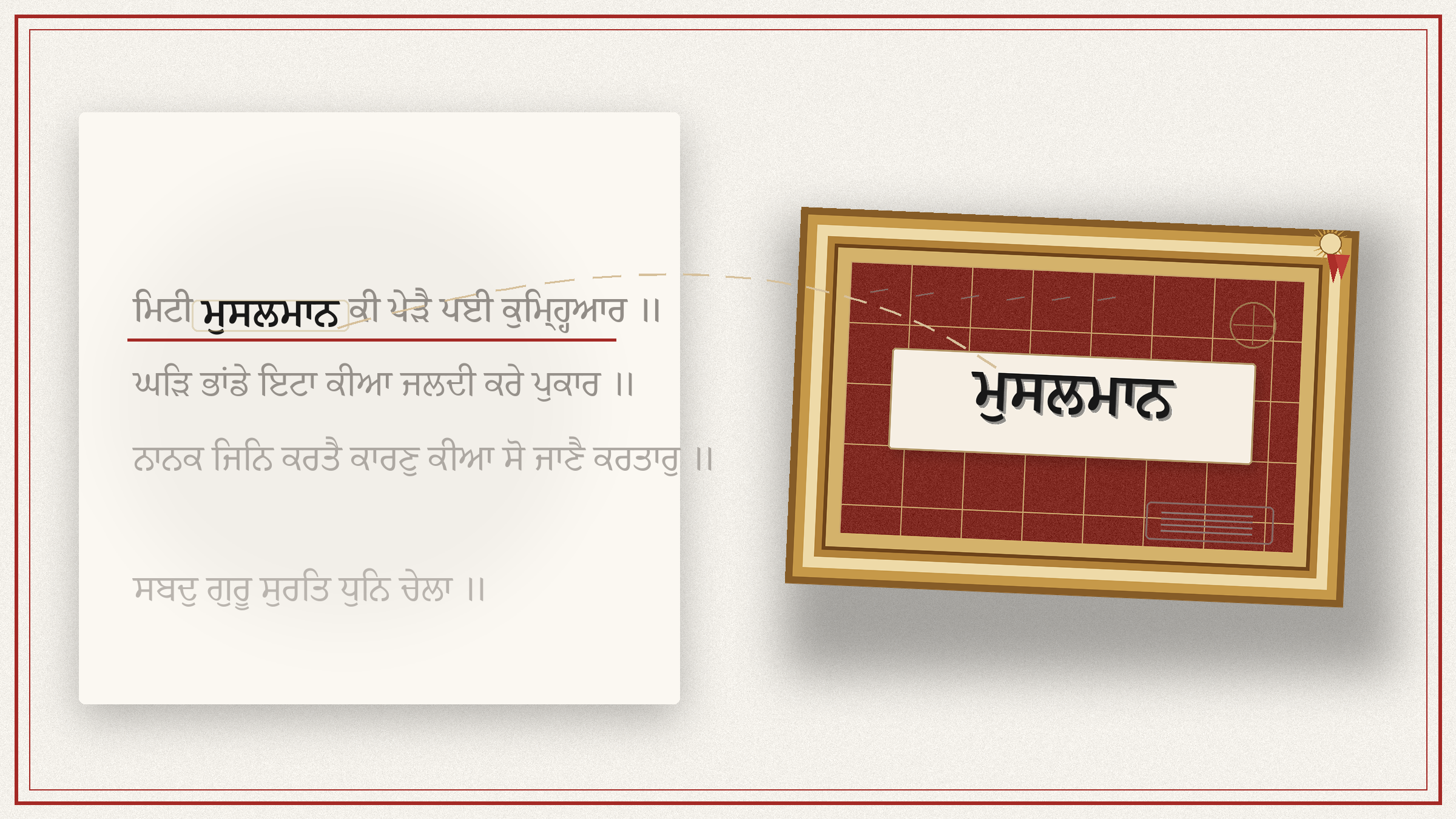
ਮਿਟੀ ਮੁਸਲਮਾਨ ਕੀ ਪੇੜੈ ਪਈ ਕੁਮ੍ਹ੍ਹਿਆਰ ॥
ਘੜਿ ਭਾਂਡੇ ਇਟਾ ਕੀਆ ਜਲਦੀ ਕਰੇ ਪੁਕਾਰ ॥
English Roman
mitee musalmaan kee payrhai pa-ee kumHi-aar.
gharh bhaaNday itaa kee-aa jaldee karay pukaar.
Plain sense:
The remains of a Muslim end up as clay on the potter’s wheel; pots and bricks are fashioned from it, and it cries out as it burns.
Ang 466.
Read in the shabad’s own context, this is not a slur. It is a reflection on mortality, embodiment, and the Creator’s sovereignty over life and death. The line ends with: “ਨਾਨਕ ਜਿਨਿ ਕਰਤੈ ਕਾਰਣੁ ਕੀਆ ਸੋ ਜਾਣੈ ਕਰਤਾਰੁ” — the Creator alone knows the reality of what has been made.
But under imperial pressure, according to the standard Sikh account reflected in Britannica, Ram Rai did not hold the line as it stood. He tried to make the line acceptable to the court by saying it had been wrongly transmitted. Sikh tradition holds that the specific change was from "musalmaan" to "beimaan" — from "Muslim" to "faithless" — a single word altered to remove the offence to the court. Whether one emphasises fear, youth, court pressure, or strategy, the result is the same: a word in Gurbani was made to answer to power rather than to the Guru.
That is why this story matters. Ram Rai did not deny the existence of Gurbani. He did not burn a manuscript. He did not renounce the Guru. He moved meaning — even if only by one word, even if only to survive a hostile room. Sikh tradition remembers the line being crossed there, not because the change was large, but because the authority being obeyed was no longer the Guru.
Story two: Dhir Mal, patronage, and the rival centre
The second story is structurally different, but it points in the same direction.
Britannica states that Dhir Mal had aligned himself with the Mughal emperor Shah Jahan, and that this was the reason Har Rai, not Dhir Mal, was appointed Guru. That is already enough to show that Mughal patronage and Sikh succession were not unrelated matters.
The Sikh Encyclopedia fills out the traditional Sikh memory: Dhir Mall remained at Kartarpur, retained possession of the original volume of the Adi Granth, set himself up as Guru, appointed his own masands, and his descendants at Kartarpur continued in possession of that manuscript.
The Sikh Encyclopedia records that Dhir Mal had received Mughal land grants, appointed his own masands to collect offerings, and used possession of the original Adi Granth — the manuscript prepared under Guru Arjan Dev Ji's own supervision — as the basis of his claim to Guruship. The rival centre was not merely symbolic. It had revenue, institutional authority, and the most sacred manuscript in the tradition.
This is the key point. In the Ram Rai story, the pressure falls on a line of Gurbani. In the Dhir Mal story, the pressure falls on authority. The state does not need to rewrite the Sikh centre if it can strengthen a rival claimant to that centre.
According to Sikh historical tradition associated with Damdama Sahib, Guru Gobind Singh later oversaw the preparation of a fresh recension of the Granth there, with Bhai Mani Singh connected as the scribe under the Guru’s supervision. The Sikh Encyclopedia’s entry on Damdama Sahib confirms that Guru Gobind Singh had Bhai Mani Singh prepare a fresh copy of the Guru Granth Sahib under his supervision, and SikhiWiki preserves the same traditional account in its articles on Damdami Bir and Damdama Sahib Bir.
That is why the Dhir Mal story matters. It shows a different mechanism from the Ram Rai episode. Meaning is not altered in open speech. Instead, a rival centre of authority is sustained through proximity, patronage, possession, and legitimacy. One story is about garbling under pressure. The other is about positioning under patronage. Both show how power tries to make Sikh meaning answer somewhere other than where the Guru placed it.
What these two stories say about the present
These stories are not offered as exact analogies. The historical people were different, the pressures were different, and the stakes were different.
The parallel is structural, not moral.
The Ram Rai story shows what happens when someone under power’s gaze makes Gurbani say something a little more acceptable to the room.
The Dhir Mal story shows what happens when power does not need to alter the text openly; it only needs to elevate, patronise, and strengthen an alternative centre from within the tradition.
That is why both stories remain relevant.
The question they raise is not narrow or historical. It is still the Panth’s question now: when praise, patronage, or national honour draw close, do Sikh categories remain answerable to the Guru — or do they begin answering to the room, the ruler, the state, the nation, or the movement that is praising them?
The mechanism documented in the companion pieces — Sahibzade framed as Bhartiyata, Guru Tegh Bahadur Ji's fearlessness linked to border protection — is the same mechanism these two stories describe, operating in a different century.
What Shabad Guru Granth Sahib Ji says about where meaning must be held
These stories only matter because Shabad Guru Granth Sahib Ji is clear about where Sikh meaning is anchored.
Gurmukhi
ਸਬਦੁ ਗੁਰੂ ਸੁਰਤਿ ਧੁਨਿ ਚੇਲਾ ॥
English Roman
sabad guroo surat Dhun chaylaa.
Plain sense:
Shabad is Guru. The disciple is the consciousness that becomes attuned to Shabad.
Ang 943.
That is what Ram Rai’s story violates. Not because a public relations error was made, but because Shabad was made answerable to power.
And Shabad Guru Granth Sahib Ji says again:
Gurmukhi
ਬਾਣੀ ਗੁਰੂ ਗੁਰੂ ਹੈ ਬਾਣੀ ਵਿਚਿ ਬਾਣੀ ਅੰਮ੍ਰਿਤੁ ਸਾਰੇ ॥
ਗੁਰੁ ਬਾਣੀ ਕਹੈ ਸੇਵਕੁ ਜਨੁ ਮਾਨੈ ਪਰਤਖਿ ਗੁਰੂ ਨਿਸਤਾਰੇ ॥੫॥
English Roman
banee guroo guroo hai banee vich banee amrit saaray.
gur banee kahai sayvak jan maanai partakh guroo nistaaray. ||5||
Plain sense:
Bani is Guru, and Guru is Bani. Within Bani is the ambrosial nectar. The sevak accepts what Guru speaks through Bani, and Guru carries that person across.
Ang 982.
This settles the matter with even greater force. The sevak’s task is maanai — to accept what the Guru speaks through Bani. Not to edit it for the court. Not to soften it for the ruler. Not to relocate it into the nation’s categories. To accept it and live it.
That is why the line in the Ram Rai story is so sharp. The Guru’s concern is not merely that pressure existed. The concern is that Sikh meaning was moved away from the Guru’s own utterance.
A note on the parallel — and where it ends
These stories are not told here to accuse present-day writers or officials of being Ram Rai or Dhir Mal. That would be careless and unfair.
Ram Rai was in the court of Aurangzeb, and Sikh historical memory treat that as a severe test under imperial pressure. Dhir Mal’s case involved succession, patronage, manuscript possession, and rival institutional authority in a very different context. The people, motives, and conditions were not the same as ours.
The parallel is narrower than that. It is simply this:
power praises,
power positions,
power draws close,
and then Sikh meaning is tempted to shift.
That mechanism has not disappeared.
And the Guru’s line has not moved.
The correction
Guru Har Rai did not treat the alteration of Gurbani as a small matter. The historical record preserved in Sikh and non-Sikh reference works agrees on that much. He excluded Ram Rai from succession over it.
Guru Gobind Singh did not allow possession of an earlier manuscript in rival hands to become the centre of Sikh authority. Sikh historical tradition instead remembers the preparation of the Damdama recension under the Guru’s own supervision.
The Panth today must make the same correction in its own conditions.
Name the alteration.
Hold the line.
Return Sikh meaning to its own home: under the Guru, in Gurmat, answerable to Shabad Guru Granth Sahib Ji.
That is the correction.
The Guru drew the line at one word.
That line has not moved.
Verify block
Gurbani locations used in this article
Ang 466:
ਮਿਟੀ ਮੁਸਲਮਾਨ ਕੀ ਪੇੜੈ ਪਈ ਕੁਮ੍ਹ੍ਹਿਆਰ ॥
ਘੜਿ ਭਾਂਡੇ ਇਟਾ ਕੀਆ ਜਲਦੀ ਕਰੇ ਪੁਕਾਰ ॥
https://sggsonline.com/guru-granth-sahib-page-466/

Ang 943:
ਸਬਦੁ ਗੁਰੂ ਸੁਰਤਿ ਧੁਨਿ ਚੇਲਾ ॥
https://sggsonline.com/guru-granth-sahib-page-943/

Ang 982:
ਬਾਣੀ ਗੁਰੂ ਗੁਰੂ ਹੈ ਬਾਣੀ... through ...ਪਰਤਖਿ ਗੁਰੂ ਨਿਸਤਾਰੇ ॥੫॥
https://sggsonline.com/guru-granth-sahib-page-982/
Cross-check instruction: Open each Ang on two independent Gurbani databases and confirm the Gurmukhi matches line by line. If any reader spots a mismatch in Gurmukhi, English Roman, Ang reference, or plain-sense rendering, it should be corrected publicly with a dated correction note.
Source note
This essay relies on two kinds of source:
First, Shabad Guru Granth Sahib Ji, which alone governs the doctrinal claims made here.
Second, Sikh historical tradition and reference works, used for the Ram Rai and Dhir Mal narratives.
The stronger historical backbone comes from:
Britannica – Guru Har Rai:
https://www.britannica.com/biography/Guru-Har-Rai

Britannica – Ram Rai:
https://www.britannica.com/biography/Ram-Rai

Britannica – Ram Raiyas:
https://www.britannica.com/topic/Ram-Raiyas

Britannica – Dhir Mal:
https://www.britannica.com/biography/Dhir-Mal

The Sikh Encyclopedia – Dhir Mall:
https://www.thesikhencyclopedia.com/dhir-mall/

The Sikh Encyclopedia – Damdama Sahib:
https://www.thesikhencyclopedia.com/damdama-sahib/

SikhiWiki – Damdama Sahib Bir:
https://www.sikhiwiki.org/index.php/Damdama_Sahib_Bir

SikhiWiki – Damdami Bir:
https://www.sikhiwiki.org/index.php/Damdami_Bir
Where this essay says “according to Sikh historical tradition,” it is signalling exactly that: the account is historically important within Sikh memory, but not being presented as identical in certainty to a line from Shabad Guru Granth Sahib Ji.